Lucas Goes spends his days thinking about trees. As a forest engineer at
Alcoa’s Poços de Caldas location in Brazil, he works to return
former mine lands returned to a natural state.
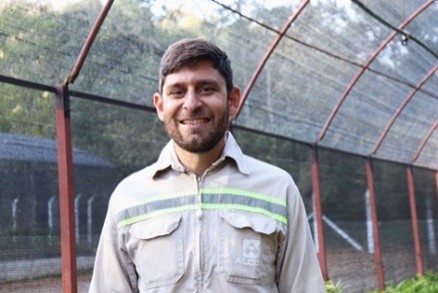
Lucas Goes visits the Alcoa nursery, which produces seedlings of native trees for mine rehabilitation and donations to the community.
Globally,
Alcoa is working to have the amount of mined areas rehabilitated or
transferred to other land users to be equal to or more than the land
used in our operations
(excluding disturbance for long-term infrastructure). The goal is a rolling
five-year average ratio of 1:1 or better.
Lucas and his team take a grounds-up approach. From growing seedlings for
more than 70 species of native trees for local adaptability to creating a
custom rehabilitation plan, Alcoa’s rehabilitation ensures the work takes
root and thrives. The rehabilitation method varies by mining area, with the
land typically being returned to its pre-mining state using native trees,
grasses and other vegetation. If an area was pasture or forest before
mining, for example, it will be returned to pasture or forest. For mining
land owned by a third party, Lucas and his team work with the landowner to
determine the rehabilitation objective.
“Since the 1970s, Alcoa has been a pioneer in mine rehabilitation in
Brazil,” said Lucas. “The program has evolved over the years, and today we
adopt the most modern techniques to return mined areas to an appropriate
biological state. Our program has been internationally recognized by the
Brazilian Society of Ecological Restoration (SOBRE).”
Alcoa’s land rehabilitation program at its operations in Poços de Caldas,
Brazil, serves as an example of the company’s long history of environmental
leadership and commitment to protecting precious biodiversity.
The program, which began in the late 1970s, utilizes modern techniques to
rehabilitate mined areas to a biological state that meets or exceeds their
pre-mined state. Since that work began, the combined rehabilitation work in
Pocos de Caldas totals more than 675 hecatares, or the equivalent of more
than 675 soccer fields.
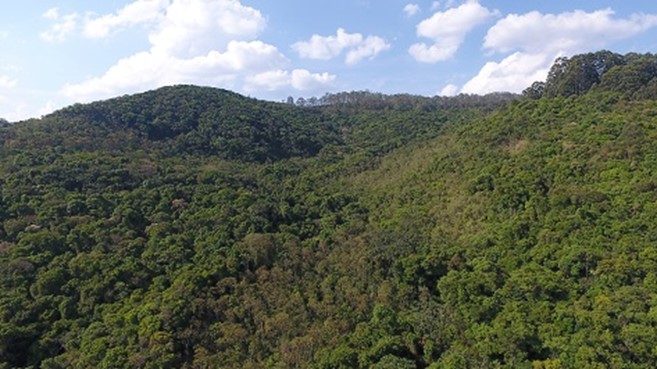
Former mining land in the Poços de Caldas region is now mature forest years after rehabilitation.
More recently, the team at Pocos has doubled the speed at which they are
rehabilitating mined areas. Between 2014 and 2019, an average of 12.3
hectares (30.4 acres) were rehabilitated annually. In 2020, despite the
challenges posted by the COVID-19 pandemic, 24.0 hectares (59.3 acres),
which is equivalent to about 24 soccer fields, was safely rehabilitated.
A major contributor to the rehabilitation program’s success is the quality
of the seedlings produced in our nursery located in the Alcoa Poços de
Caldas Environmental Park. On average, the nursery annually produces
100,000 seedlings of 70 species of native trees to ensure greater genetic
variability, local adaptability and seedling development.
With the increased rehabilitation rate at Poços de Caldas, more of these
native trees will be taking root and returning the land to its natural
state more quickly.